The Temple of Deir el Bahari, Hatshepsut
|
The Temple of Deir el Bahari, Hatshepsut
|
The Temple of Deir el Bahari, Hatshepsut
|
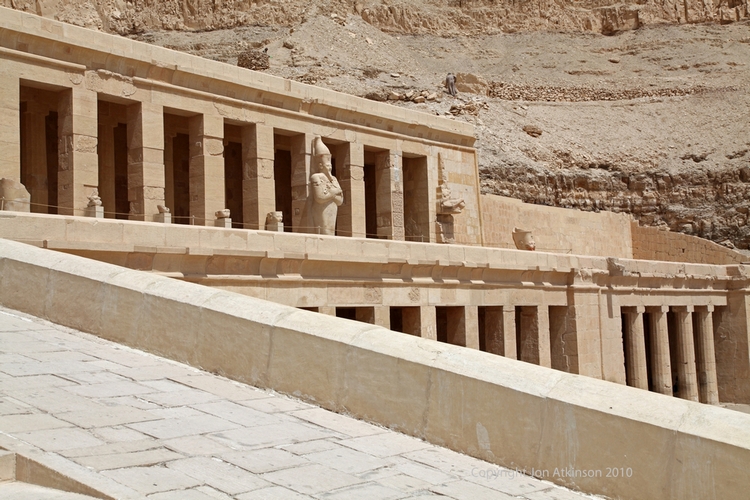
Hatshepsut 1 - The Temple of Deir el Bahari: The Temple of Deir El-Bahri located on the west coast of the Nile is the mortuary temple of Queen Hatshepsut, one of the most iconic temples in the whole of Egypt, due to its design and decorations. It was built of limestone, not sandstone like most of the other funerary temples of the New Kingdom period. |
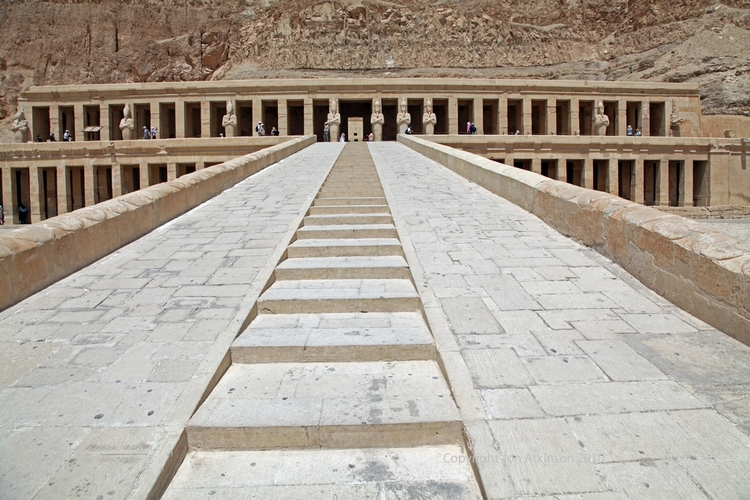
Hatshepsut 2 - The Temple of Deir el Bahari: It is a colonnaded structure, which was designed and implemented by the architect Senmut in 1480BC. A 100-foot causeway leads to the temple, which consists of three terraced courtyards covered in sculptural reliefs. |
Hatshepsut 3 - The Temple of Deir el Bahari: The temple is dedicated to Amon and Hathor although there are chapels that are dedicated to other gods such as Anubis.He created the temple with rows of colonnades that reflect the vertical patterns displayed by the cliff behind.There are three layered terraces reaching 30 meters high. |
Columns on the left of the upper terrace
|
Columns on the left of the upper terrace
|
Columns to the right of the upper terrace
|
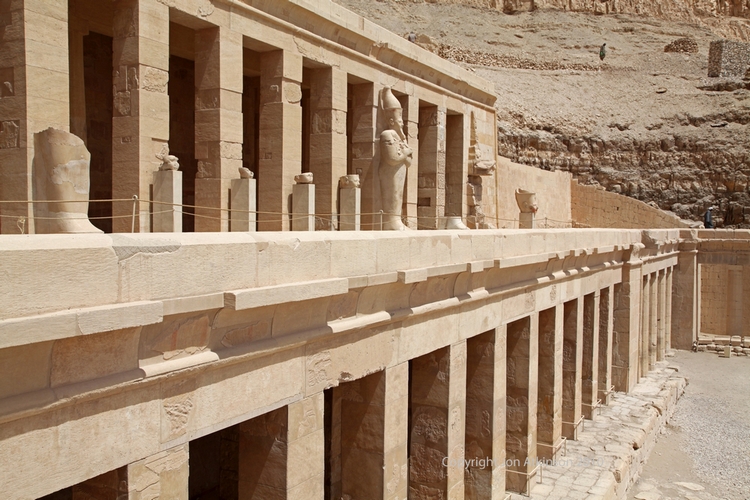
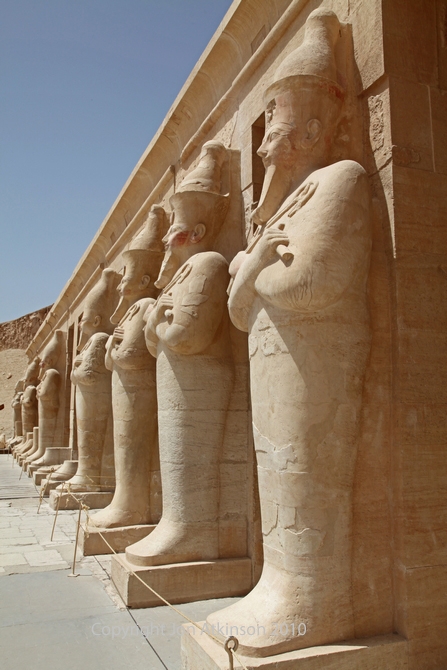
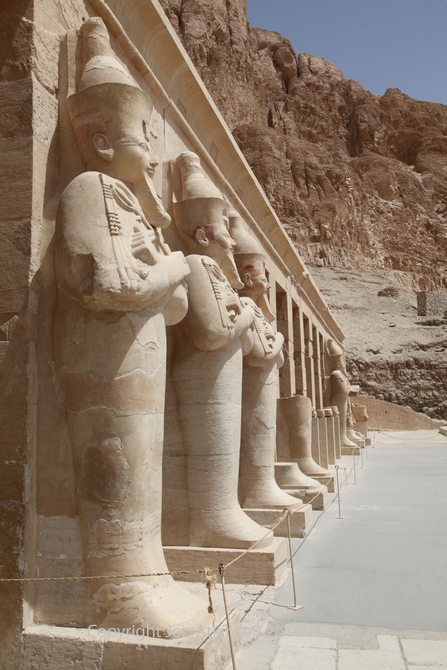
Hatshepsut 4 - Columns on the left of the upper terrace: Osiride columns of Queen Hatshepsut on the left hand side of the third terrace of her mortuary temple at Deir el-Bahri. note the mummification shroud enclosing the lower body and legs as well as the crook and flail associated with Osiris.
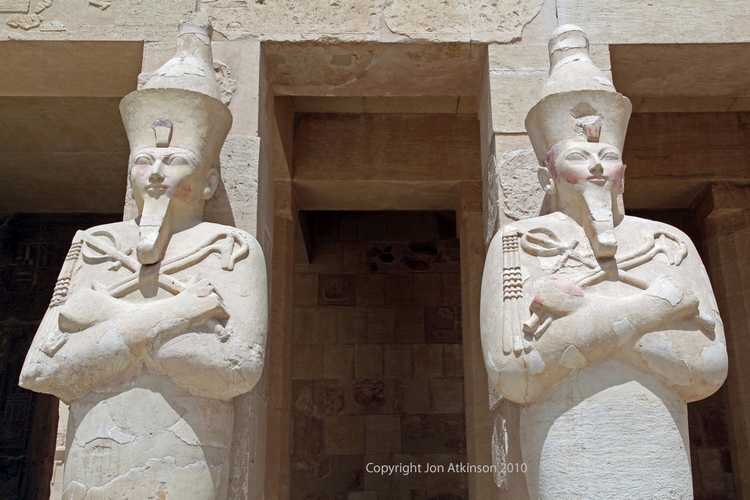
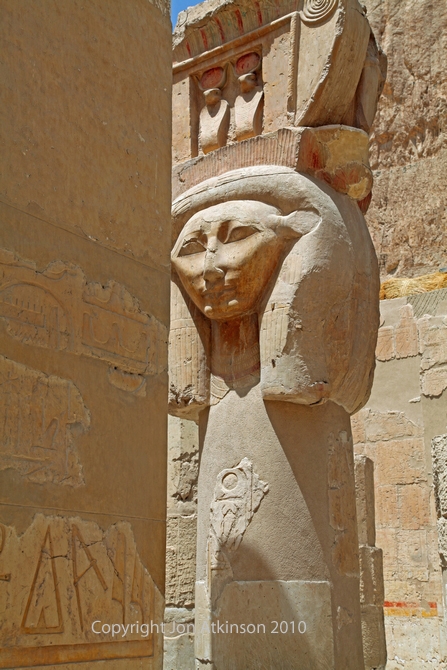
| Hatshepsut 5 - Columns on the the upper terrace:Close up of two Osiride columns of Queen Hatshepsut on the third terrace of her mortuary temple at Deir el-Bahri. |
Hatshepsut 6 - Columns to the right of the upper terrace: Osiride columns of Queen Hatshepsut on the right hand side of the third terrace of her mortuary temple at Deir el-Bahri.
|
|
|
The face of Hatshepsut, Temple of Deir el Bahari
|
Rear view of Columns on the Upper terrace, Temple of Deir el Bahari.
|
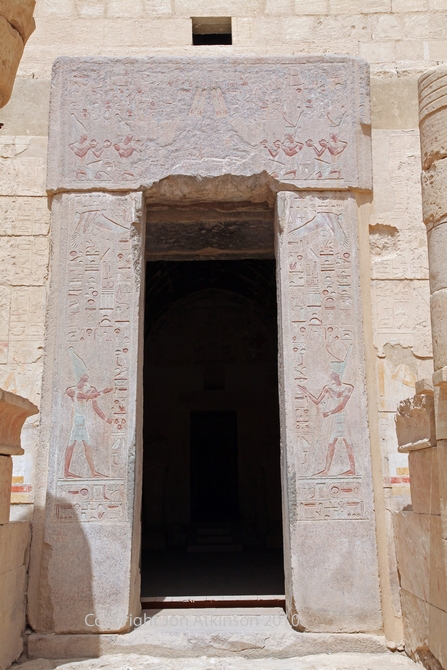
Hatshepsut 7 - Entry to the Sanctuary of Amun, Temple of Deir el Bahari: The Sanctuary would have been the resting place for the barque of Amun during the Valley Festival. The sanctuary was later expanded by Ptolemy VIII, Euergetes who added a third chamber dedicated to Imhotep and Amenhotep Son of Hapu who were worshipped as deities at this time and associated with gods of healing. The third terrace later became a sanatorium. |
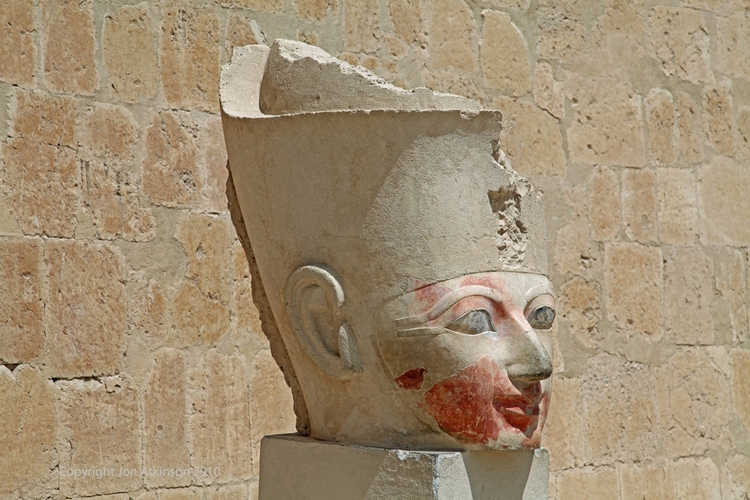
Hatshepsut 8 - The face of Hatshepsut, Temple of Deir el Bahari: Hatshepsut was the daughter of Pharaoh Tuthmosis I and the wife of his successor Tuthmosis II. Tuthmosis II died before she bore a son. Rather than step aside for the secondary wife who had borne him an heir, she became co-regent of her stepson, the young Tuthmosis III. After which she assumed full power. |
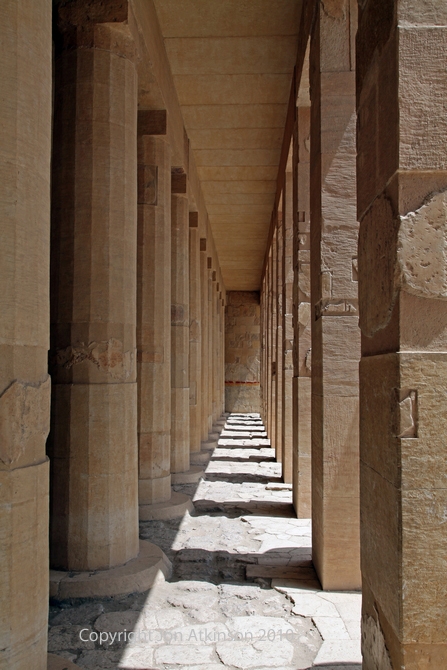
Hatshepsut 9 - Rear view of Columns on the Upper terrace, Temple of Deir el Bahari: The second ramp leads to the uppermost terrace. A long solemn row of identical Osiris statues of the queen forms the facade fronting the square pillars of the main hall. The Osiris statues had been changed to the square pillars by Tuthmosis III after Queen Hatshepsut had died to erase her from his mind. This creates an unusual corridor bordered by circular and square pillars. |
|
|
Hieroglyphics in Temple of Dier el Bahari
|
Hieroglyphics in Temple of Dier el Bahari.
|
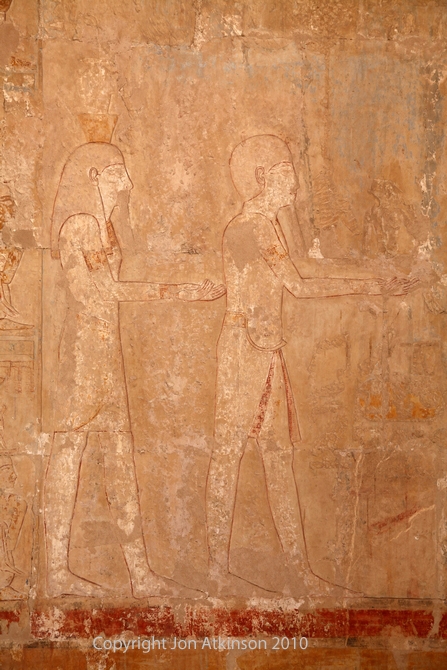
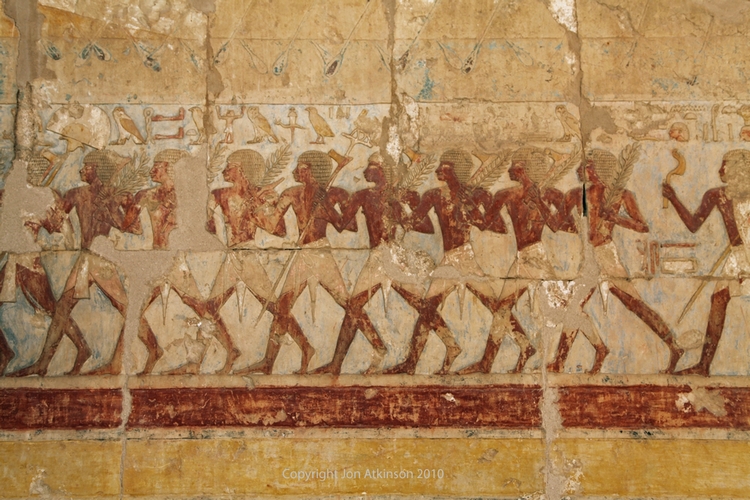
Hatshepsut 10 - Hator Chapel, Temple of Deir el Bahari: In a festival scene, soldiers run forward carrying branches of trees along with their axes. |
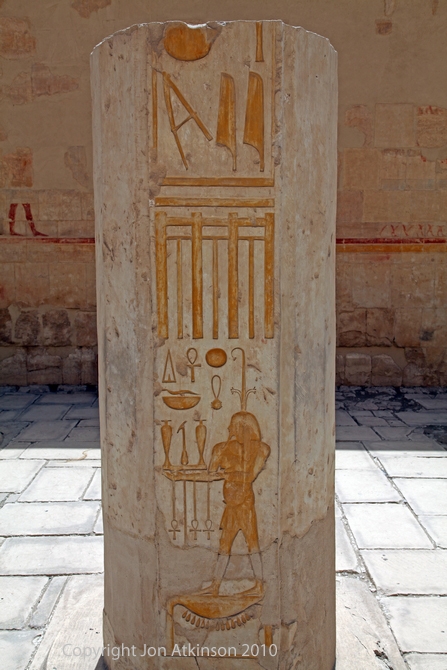
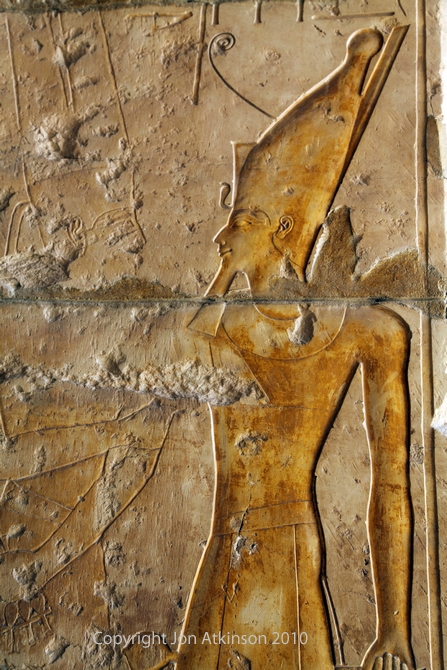
Hatshepsut 11 - Hieroglyphics in Temple of Dier el Bahari: Hieroglyphics in Temple of Hatshepsut at Dier el Bahari Temple. |
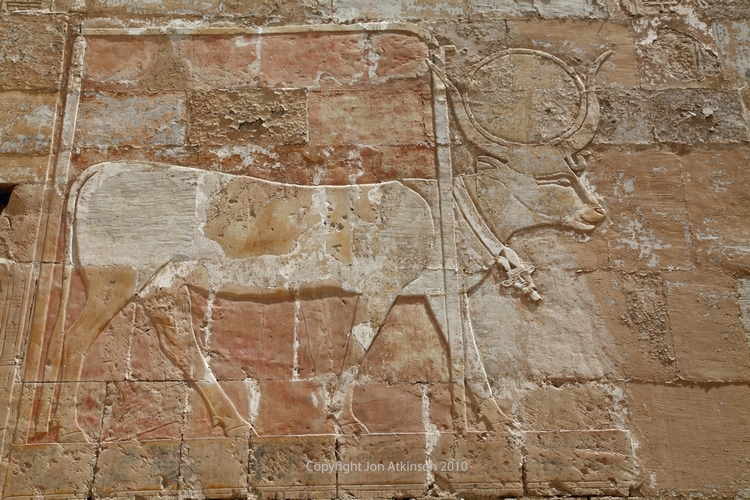
Hatshepsut 12 - Hieroglyphics in Temple of Dier el Bahari: Hathor is commonly depicted as a cow goddess with head horns in which is set a sun disk. Hathor was worshiped by Royalty and common people alike in whose tombs she is depicted as “Mistress of the West” welcoming the dead into the next life. |
|
|
Hieroglyphics in Temple of Dier el Bahari
|
Wall relief showing Hathor as a cow
|
Hatshepsut 13 - Hathor Chapel,Temple of Deir el Bahari:In a festival scene, soldiers run forward carrying branches of trees along with their axes. |
Hatshepsut 14 - Temple of Dier el Bahari: Hieroglyphics in Temple of Hatshepsut at Dier el Bahari Temple. |
Hatshepsut 15 - Wall relief showing Hathor as a cow: Hathor is commonly depicted as a cow goddess with head horns in which is set a sun disk. Hathor was worshiped by Royalty and common people alike in whose tombs she is depicted as “Mistress of the West” welcoming the dead into the next life. |